Zinc & Standing Seam Roofing in North London | Enfield Specialists
Standing Seam & Zinc for North London Houses and Extensions: A Local Guide
Yes — zinc and standing seam roofing work exceptionally well on North London's Victorian and interwar housing stock, and most of the metal roofing we install across the N and NW postcodes is exactly that: dormers on loft conversions, flat-to-standing-seam rear extensions, side returns, bay tops and porch roofs. We are based in Enfield, so North London is home turf — this guide covers what works on these houses, what conservation officers typically ask to see, and how to avoid the mistakes we get called in to fix.
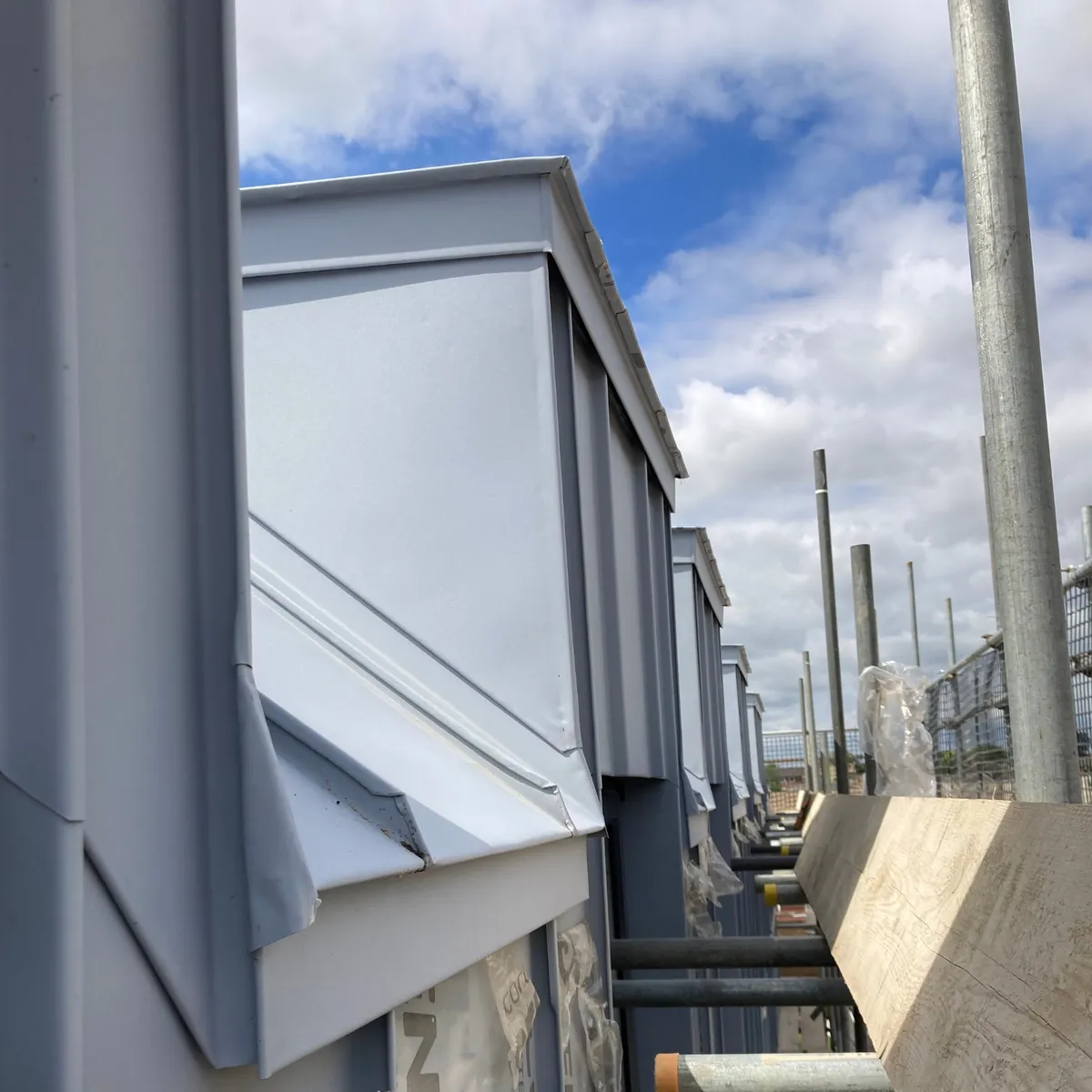
North London's housing stock was made for hard metal — dormers, butterfly roofs and side returns are standing-seam territory. The trick is detailing them for these specific houses.
It is written for homeowners planning a dormer or extension in Enfield, Barnet, Haringey, the Camden fringes, Hampstead or Highgate — and for architects and developers working on the same streets.
Why North London houses suit zinc and standing seam
The N-postcode stock — Victorian terraces, Edwardian bays, interwar semis — shares three features that suit metal roofing perfectly. First, dormers: almost every loft conversion needs one, and a welted zinc or copper dormer is lighter, thinner and sharper than a tiled cheeks-and-flat-roof build-up. Second, low-pitch rear roofs: extensions and butterfly roofs often sit below the minimum pitch for tiles, where standing seam is entirely comfortable. Third, tight plots: metal's slim build-up and clean junctions earn their keep where every centimetre of headroom and party-wall detail matters.
Add the aesthetic argument — a mid-grey zinc dormer reads as crisp and deliberate against London stock brick — and it is no surprise that zinc has become the default language of the North London extension. The question is not whether metal suits these houses, but who details it.
What works where: the North London housing stock
House type | Typical metal scope | The watch point |
Victorian terrace | Rear dormer, butterfly roof recovery, side return | Butterfly valleys concentrate water — detailing and falls are everything |
Edwardian semi | Bay-top roofs, porch roofs, dormers | Curved bay tops need hand-welted segmental work, not panel thinking |
Interwar semi | Hip-to-gable dormers, extension roofs | Long dormer runs need movement allowances in the seam strategy |
Modern rear extension | Standing seam roof and wrap, parapet coping | Junctions to existing brickwork and rooflights drive the labour |
Conservation-area house | Pre-weathered zinc or copper in heritage-acceptable tones | Finish choice and the planning submission go together — see below |
If your house is on this list, the metal scope is proven territory. The differences between a good job and a callback live in the watch-point column.
Planning and conservation in plain English
Much of the territory we work in — Hampstead, Highgate, the Haringey ladder, the Barnet and Camden conservation areas — comes with planning scrutiny, so here is the honest picture. This is general guidance, not legal advice, and your architect or the council's duty planner has the final word.
Many dormers fall within permitted development — but conservation areas, Article 4 directions and flats change the rules, so check before assuming. Where an application is needed, metal roofing is not a disadvantage; it is often an asset.
Officers typically ask to see the finish, not just the material. Mid-grey pre-weathered zinc (QUARTZ-ZINC, prePATINA-type finishes) and lead-grey tones are routinely accepted because they echo traditional lead and slate. We regularly supply physical finish samples and manufacturer colour cards to support submissions — a swatch in the officer's hand settles more arguments than a paragraph in the design statement.
Precedent matters. Streets where zinc dormers already exist are easier conversations. Part of our survey is noting what the neighbours' roofs have already established.
Where we work
Our base is Enfield — EN3 — and most of our domestic work is within a half hour of it: Enfield itself, Barnet, Haringey, the Camden and Islington fringes, Hampstead and Highgate. We also cover North West London — Harrow, Wembley, Uxbridge and the streets between — where the same interwar and Edwardian stock takes the same details.
Being local is not a slogan; it changes the job. Surveys happen quickly, the same crew that surveyed installs, and when a North London storm tests a flashing, we are twenty minutes away rather than a postcode lottery.
How this goes wrong on site
The North London failures we are called to inspect have a pattern. Dormer cheeks installed by a general roofer with a seaming machine, welts opening on the first hard frost. A butterfly-roof recovery where the valley discharge was never routed, staining and corroding everything below it. Side-return roofs laid without a ventilation strategy, sweating into the new kitchen ceiling by the first winter. Bay tops clad in flat panels with mastic edges, because curved segmental work was beyond the installer. And the classic: a beautiful standing-seam extension roof meeting the Victorian main roof with a junction nobody drew.
Every one of these is a detailing failure on exactly the house types in the table above — which is why we survey, draw the junctions and fabricate the flashings ourselves before any metal goes up.
A real example
On the Travelodge Twickenham project (2025), we supplied and installed aluminium cladding on a commercial London building where repetition, colour stability and programme discipline were the brief — the same supply-and-fit model we bring to a North London dormer: survey first, fabricate our own flashings, install with our own crew, and stand behind the workmanship warranty. The scale differs; the discipline does not.
If your house is in North London — pick your seat
If you are a homeowner
Send two photos — the existing roof and the space the dormer or extension will occupy — plus your postcode, and we will tell you in writing within 48 hours whether standing seam suits the job and what the planners on your street typically accept. If you are mid-conversation with an architect or builder, loop us in early; the metal decisions are cheapest before the drawings are fixed.
If you are an architect
We regularly support planning submissions with finish samples and colour cards, and we will review dormer and extension junctions before tender — the valley, abutment and parapet details are where these projects succeed or fail. Send the drawing set for a written view within 48 hours.
If you are a developer
Multi-plot dormer and extension schemes across N and NW postcodes are repeatable work for a supply-and-fit contractor: one system, one fabrication set-up, consistent finish across plots. Send the roof plans and the programme and we will tell you where metal sits on the critical path.
FAQs
Do I need planning permission for a zinc dormer in North London?
Often not — many dormers fall within permitted development rights — but conservation areas, Article 4 directions, flats and previous extensions can all change that. Check with your council or architect before assuming, and choose the finish early: a pre-weathered grey zinc that echoes lead makes the planning conversation noticeably easier where consent is needed.
Zinc or copper for a period house in North London?
Both work. Mid-grey zinc is the contemporary default and the easiest with planners; copper suits feature elements — bays, porches, dormers — where warmth and the patina journey are wanted. On streets with existing zinc precedent, matching the street is usually the smoothest route. We install both and will show you local examples of each.
How much does a zinc dormer cost in North London?
Dormers are priced as bespoke work rather than by the square metre — access, the junction to the main roof, window interfaces and the finish move the number more than area does. Our 2026 cost guide explains the bands; send photos and rough dimensions and we will place your dormer in the right band within 48 hours.
Can you match the metal roof my neighbour already has?
Usually, yes. Pre-weathered zinc finishes (QUARTZ-ZINC, ANTHRA-ZINC, prePATINA) cover most of what is already on North London streets, and natural zinc or copper can be specified to mature toward an existing tone. Bring us a photo of the neighbour's roof and we will identify the likely system at survey.
How disruptive is metal roofing work on a terraced house?
Less than most people expect. A dormer or extension roof is typically days rather than weeks of metalwork; the noisy part is deck preparation, not seaming. Scaffold needs agreeing with neighbours on tight plots — we handle the logistics, keep the site tidy, and fabricate most flashings off-site to shorten the disruption.
Do you cover my area — Harrow, Wembley, Uxbridge?
Yes. From our Enfield base we cover all of North and North West London — Enfield, Barnet, Haringey, Camden fringes, Hampstead, Highgate, Islington, Harrow, Wembley, Uxbridge — plus Essex, Hertfordshire and the wider South East. Send your postcode with the enquiry and we will confirm scheduling for your street.
Book a North London Survey
Send two photos and your postcode and we will come back in writing within 48 hours — whether standing seam suits your house, what your street's planners typically accept, and which finish we would put on it. Or book a site survey and we will measure properly and bring the sample box.
Prefer to read first? See our zinc roofing and cladding work and our Barnet and North London coverage. Material samples and finish cards are available with any enquiry.
Dr Mastercraft Ltd — supply and fit of zinc, copper, aluminium, steel and standing-seam roofing and cladding. Based in Enfield, working across North London, Essex and the South East. Call the office to book your survey.