Metal Cladding Colours: Complete Guide (Zinc, Copper, Steel)
Metal Cladding Colours: The Complete Guide to Finishes for Zinc, Copper, Steel & Aluminium
Choosing a metal for your roof or façade is only half the decision — the colour and finish is what you will actually look at for the next 40 to 100 years. This guide walks through every colour option across the four metals we install most — zinc, copper, coated steel and aluminium — how each finish changes over time, and how to choose a colour your planner, your neighbours and your future self will all be happy with.
Choose the metal first, the colour second — and decide for the tenth year, not the first week.
What colours does metal cladding come in?
Metal cladding comes in three colour families: natural living finishes (zinc and copper, which develop a patina and change colour over time), factory pre-weathered or pigmented finishes (pre-patinated zinc, pre-oxidised copper), and coated finishes (powder-coated or coil-coated aluminium and steel in virtually any RAL colour). Between them, the practical palette runs from bright metallics and greys through greens, browns, reds, blues and near-black.
The right choice depends on the metal first and the colour second, because each metal achieves colour in a completely different way — and behaves differently over the decades.
Zinc cladding colours: greys, pigments and the patina
Zinc is the most specified metal in UK contemporary architecture, and its colour range is wider than most people realise.
Natural zinc starts bright and silvery, then weathers over one to three years into its familiar soft, mid-grey patina. That patina is not a coating — it is a self-healing zinc carbonate layer the metal grows itself, and it is what gives zinc roofs their 60–100 year lifespan.
Pre-weathered zinc — such as QUARTZ-ZINC (light grey) and ANTHRA-ZINC (anthracite, near-black) — is treated at the factory so the building has its mature, even colour from day one. No waiting, no patchy in-between years.
Pigmented zinc — the VMZINC PIGMENTO range, for example — bonds mineral pigment into the pre-weathered surface, giving durable browns, reds, greens, blues and blacks while keeping the texture and self-healing character of real zinc. A pigmented zinc façade can look remarkably warm and un-industrial.
Rheinzink's prePATINA (blue-grey and graphite-grey) and elZinc's Rainbow colour range offer similar pre-weathered and pigmented options, so a specified zinc colour can usually be matched across all three manufacturers we work with. See how these finishes look in practice on our zinc roofing and cladding service page.
Copper: the metal that changes colour on purpose
Copper starts bright metallic orange-pink, darkens through russet and chocolate brown within the first few years, then slowly develops its famous green (or blue-green) patina — typically over 15 to 30 years in UK conditions, faster in coastal or urban air. Every stage is attractive, but you should choose copper for the whole journey, not just the starting colour.
If you want the end result without the wait, pre-patinated copper arrives already green, and pre-oxidised or burnished copper (such as the TECU ranges) arrives in deep brown or near-black. There are also alloy options — brass (golden) and bronze (warm brown) — for feature panels, dormers and entrances.
Copper gutters and downpipes follow the same colour journey as the roof, which is worth planning for: bright copper guttering against dark brick looks striking now and quietly handsome in ten years.
Aluminium cladding colours: any RAL colour, guaranteed
Aluminium is the colour chameleon: powder-coated (PPC) or coil-coated aluminium is available in virtually any RAL colour — over 200 standard shades — plus metallic, matt, textured and anodised finishes. Because the colour is a factory-applied coating rather than a living patina, the shade you choose on day one is the shade you keep, with quality systems carrying colour and coating guarantees of up to 40 years.
Two practical points when choosing an aluminium colour. First, ask for a PVDF or equivalent premium coating rather than standard polyester in exposed locations — it holds colour and gloss far better under UV. Second, anodised finishes (bronzes, silvers, near-blacks) are integral to the metal and exceptionally colour-fast, but the palette is narrower and panel-to-panel tone variation should be reviewed on samples.
We install PREFA aluminium systems — including on a 412 m² project carrying a 40-year guarantee — precisely because the coating quality and colour stability are specified, warranted and boring in the best possible way.
GreenCoat PLX steel: colour with the deepest green credentials
GreenCoat PLX colour-coated steel comes in a curated palette of roughly 20–30 colours — from classic anthracite and black through silver, white, brick red, moss green and several metallic and copper-effect shades — and its coating is made with Swedish rapeseed oil replacing a substantial portion of the fossil oils used in conventional coatings.
For standing seam roofing and cladding, PLX bends and folds cleanly without cracking the coating, which is why it suits both traditional profiles and crisp contemporary lines. If you want a coloured metal roof on a tighter budget than zinc or copper, coated steel is usually where the conversation starts.
What is the best colour for a metal-clad house?
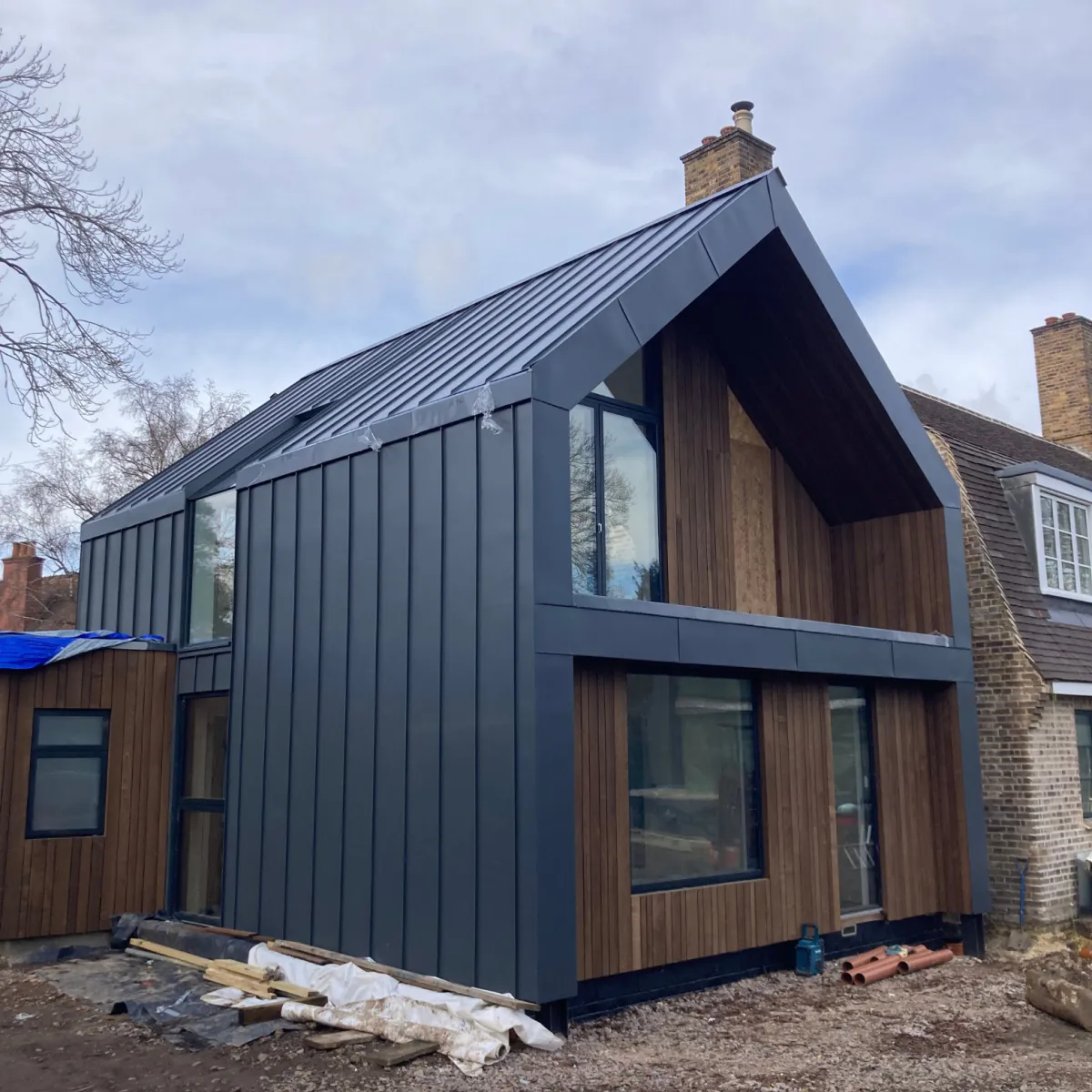
There is no single “best” colour, but the safest and most specified choices in the UK are anthracite grey (near-black), mid zinc-grey and natural weathered tones. Anthracite suits contemporary extensions and pairs with almost any brick or render; mid-grey zinc reads as quiet and premium in conservation settings; greens and browns work best on rural or heavily landscaped plots. Choose against your brickwork, your planning context and the colour the metal will be in ten years — not just the brochure swatch.
1. Match tone, not colour. Warm brick wants warm metals (copper, brown pigments, bronze anodising). Cool grey render and stock brick want cool metals (anthracite, natural zinc, silver).
2. Think about the tenth year, not the first week. Natural zinc and copper will change; coated aluminium and steel will not. Neither is better — but they are different commitments.
3. Dark colours show less staining and weather more gracefully between cleans; very light colours show algae streaking sooner on north-facing façades.
4. Dark roofs absorb more heat. On well-insulated modern roofs this is rarely a problem, but it is worth factoring in on south-facing low-slope roofs over bedrooms.
5. Get physical samples and site mock-ups. Screen colours lie. We always review full-size bent samples on site, in daylight, before a colour is signed off.
Popular metal roof and cladding colour combinations
Combination | Where it works |
Anthracite zinc or aluminium + London stock brick | Contemporary rear extensions and dormers across North London — crisp contrast, planner-friendly |
Mid-grey natural zinc + white render | Scandinavian look; the grey patina softens bright render over time |
Copper or bronze + red brick | Warm-on-warm; classic for bay roofs, porches and dormers |
PIGMENTO brown or green zinc + timber cladding | Rural and edge-of-village plots; sits quietly in landscaping |
Black coated steel + charred or black-stained timber | Bold contemporary whole-house cladding |
Green pre-patinated copper + stone | Heritage and ecclesiastical settings where the patina reads as “always been there” |
Planning rules, conservation areas and colour
Colour is the number-one reason metal roofing gets pushback at planning. The good news: mid-grey zinc, lead-grey finishes and pre-weathered metals are routinely accepted in UK conservation areas because they visually echo traditional lead and slate. Bright natural copper, strong colours and high-gloss finishes are harder to argue for on listed or conservation-area buildings.
If your project is in a conservation area — much of Belgravia, Mayfair and the North London suburbs we work in are — choose the colour with the planning conversation in mind, not after it. We regularly supply finish samples and manufacturer colour cards to support planning submissions.
Does the colour affect the cost?
Standard natural and pre-weathered finishes usually sit within the base price band for each metal. Pigmented zincs, pre-patinated copper, premium PVDF coatings and non-standard RAL colours typically add a modest premium — usually more from the extra lead time and minimum orders than the pigment itself. The metal, roof complexity and access drive cost far more than colour does.
Because the premium varies by manufacturer and finish, we itemise it separately in every quote so you can see exactly what a colour upgrade costs before committing.
FAQs
Do metal cladding colours fade?
Living metals (zinc, copper) do not fade — they patinate, which is a protective surface change, not degradation. Coated metals can slowly lose gloss over decades; premium PVDF and anodised finishes are specified precisely because they hold colour longest, with guarantees of up to 40 years on quality systems.
Can I get metal cladding in a specific RAL colour?
Yes — in powder-coated aluminium and coated steel, virtually any RAL colour is available. Zinc and copper are limited to their natural, pre-weathered and pigmented ranges.
What colour is zinc cladding when it ages?
Natural zinc weathers from bright silver to a soft mid-grey over one to three years and stays there. Pre-weathered finishes (QUARTZ-ZINC, ANTHRA-ZINC, prePATINA) start at their mature grey and stay stable.
Is anthracite or black metal cladding a good idea?
It is the most specified contemporary colour in the UK and very forgiving of staining. Use a quality coating, check heat gain on sun-exposed low-slope roofs, and confirm the finish is matt or low-gloss if glare or planning are concerns.
Do copper gutters turn green too?
Yes — copper gutters and downpipes follow the same brown-to-green patina journey as copper roofing, usually slightly faster because they stay wetter.
Which metal cladding colour adds the most value?
Estate agents consistently tell us well-detailed zinc and copper work signals quality to buyers. The colour matters less than the material and the craftsmanship — a mid-grey zinc or maturing copper façade reads as “architect-designed” in a way no coated panel quite does.
Choosing Your Finish
Every project we take on includes physical finish samples reviewed on your building, in real daylight, before sign-off — and our quotes itemise the finish premium separately so colour decisions are made with real numbers, not guesses. If you are weighing up zinc versus copper versus coated finishes, or you have a planning constraint to design around, get in touch with our Enfield team for honest advice and samples — or browse recent finishes in our project portfolio.
Dr Mastercraft Ltd — bespoke zinc, copper, aluminium and coated-steel roofing and cladding, installed across London, Essex and the South East. Call the office to arrange a sample board.